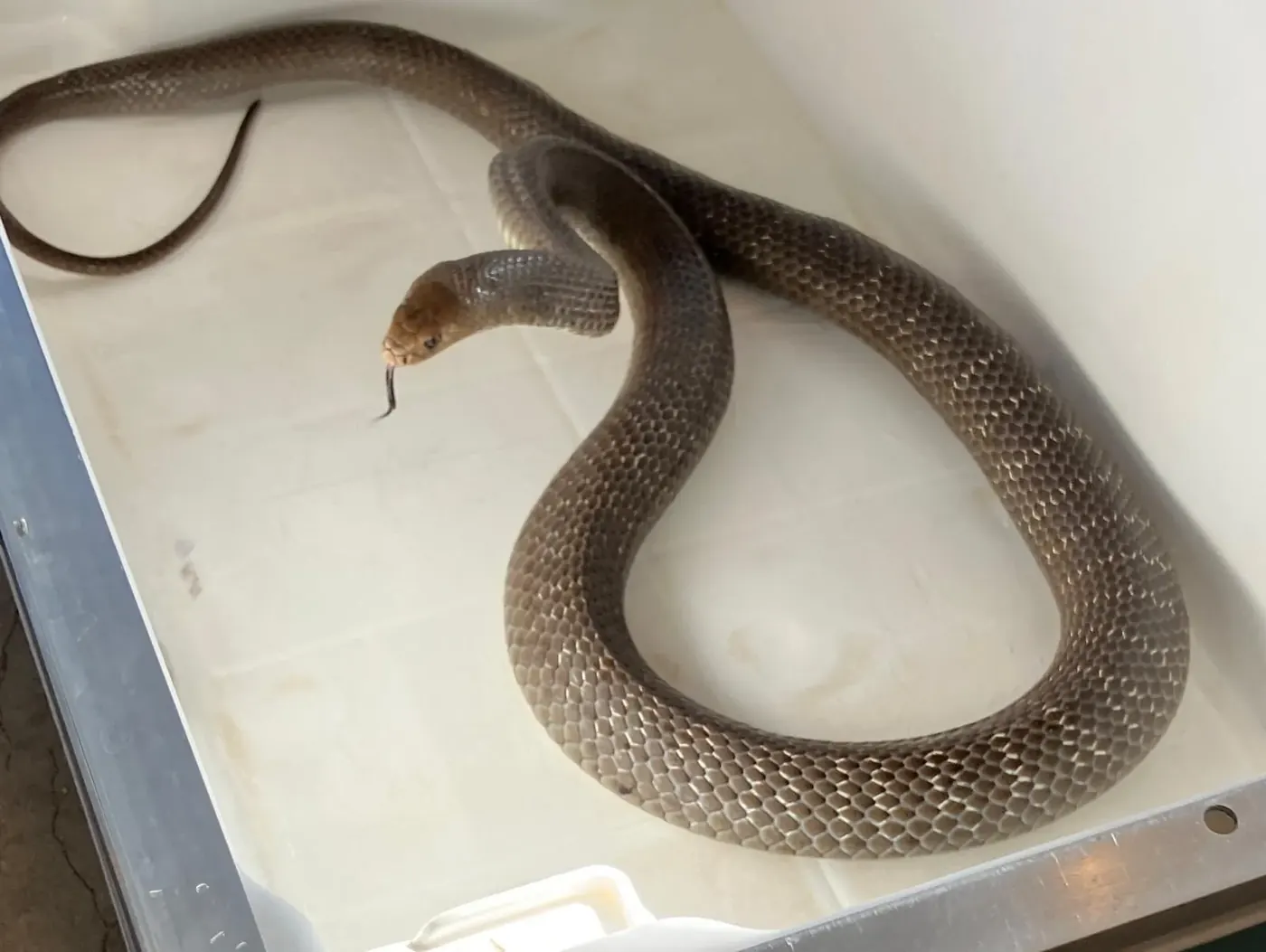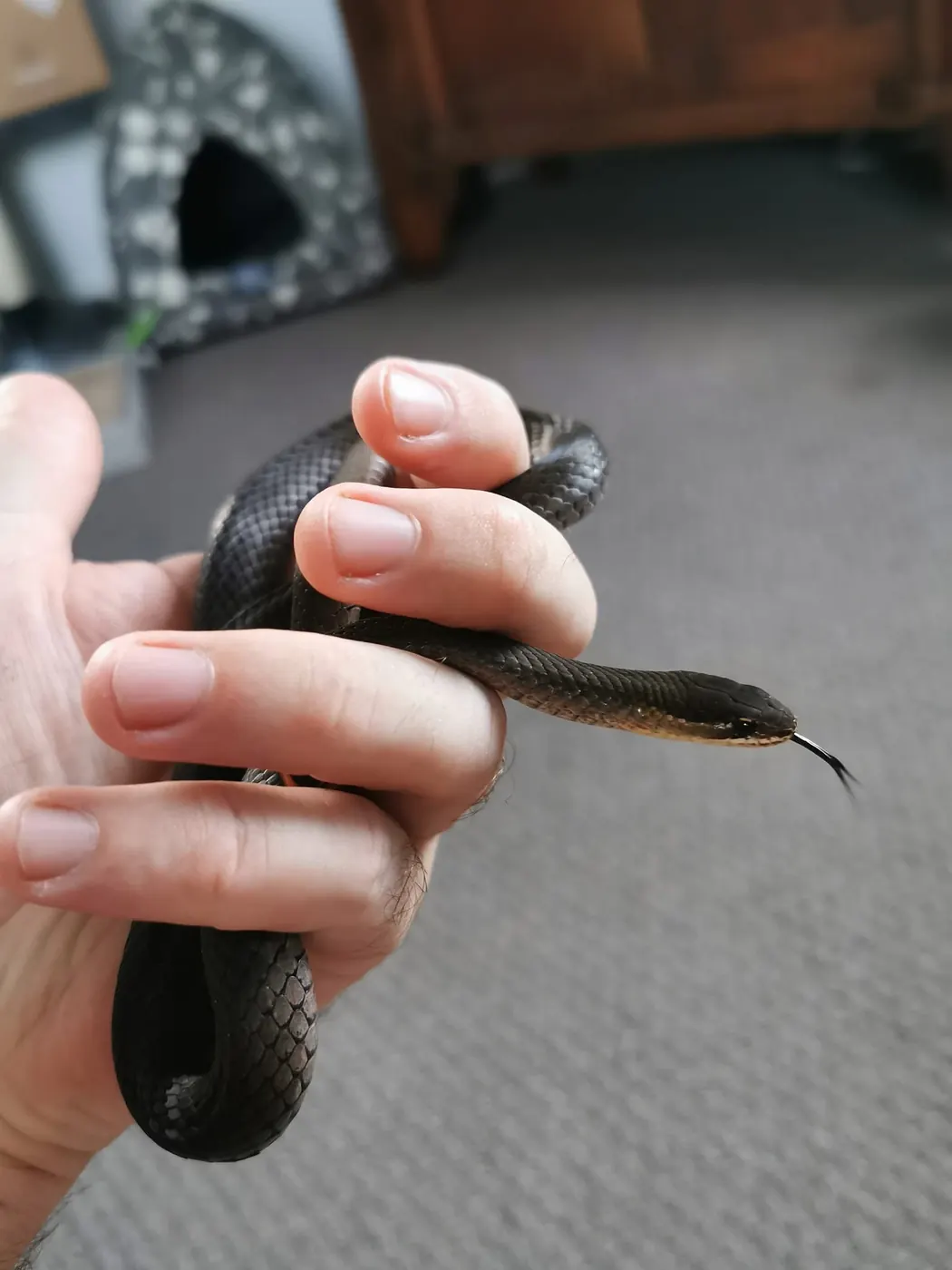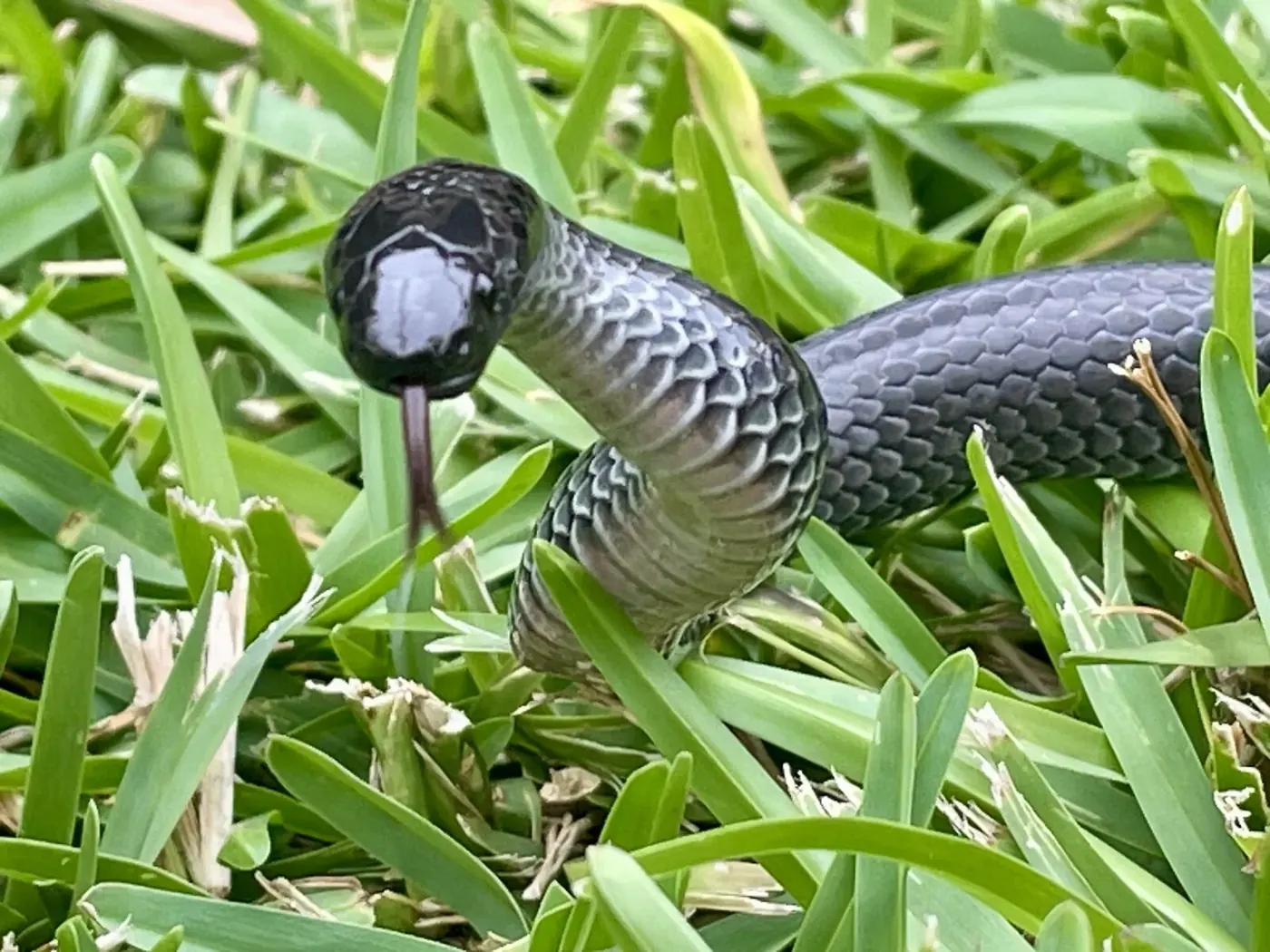
Colour and appearance
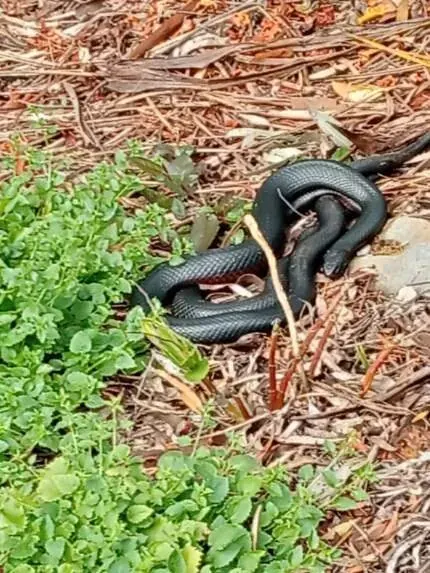
Glossy black above, with red to orange lower flanks. The belly is not necessarily solid red.
Habitat
Moist habitats including creeks, ponds and swamps, and nearby woodland.
Behaviour
Generally retiring and slow to bite. May flatten its neck as a warning. Active by day in warmer weather.
NSW distribution
Found along much of eastern New South Wales, mainly associated with water.
Relevance to Western Sydney
Creek corridors such as Eastern Creek and Toongabbie Creek offer the kind of moist habitat this species is associated with. That is habitat, not proof of a resident population along every waterway.
Identification notes
- Black back with a clear band of red or pink along the lower flanks.
- Often seen near dams, creeks, drains and damp gardens.
- Several other snakes are dark. Do not rely on colour from up close.
More photos
Safety
Venomous and not safe to handle. Treat any bite as a medical emergency and call 000.
Pet safety
Dogs that grab or attack one can be envenomated. See an emergency vet immediately.
If you encounter one
- 1Move people and pets away. Give the snake several metres of space.
- 2Keep watching it from a safe distance if you can, so you can tell the catcher where it went.
- 3Do not try to kill, trap, cover or move it. Most bites happen when people interfere.
- 4Call 0428 458 856 (backup: 0413 014 607) and describe where it is and what it is doing.
FAQs
Is a red-bellied black snake dangerous?+
Yes. It is venomous and bites need urgent medical care, although it is generally shy.
Why is it in my yard near the creek?+
It hunts frogs. Ponds, damp garden beds and creek-side fences are attractive.
Sources and further reading
Western Sydney service-area guides
These local guides describe their suburb settings; they do not indicate confirmed snake sightings.